


Page 13 - CJSeptember25
P. 13
mance at least once during their program of study.  ular  composer. Leonard Bernstein, for example, was
           One of the primary research questions posed by this   born in 1918, making 2018 the one hundredth anni-
        study concerns the way the repertory changed between   versary of his birth; a large number of performances
        the first and the second time periods studied. In Tables   in 2018 celebrating that milestone would explain the
        2 and 3 on the next two pages, the composers with the   subsequent  drop  in performances in the  2021–2023
        greatest change in number of performances between the   timeframe. Other shifts may reflect the larger cultural
        time periods are listed, along with the raw number of   or programming changes that are the subject of this
        performances that each composer saw in each period   study. For example, the five composers with the greatest
        studied and the size and direction of the change.   increase in performances are all women, with the sixth-
           Some of the changes seen in these two tables may   and seventh-greatest rise in performances belonging to
        reflect  specific  circumstances  surrounding  the  partic-  two Black men. In fact, only four of the sixteen com-
                                                            posers with the greatest rise in performances are White

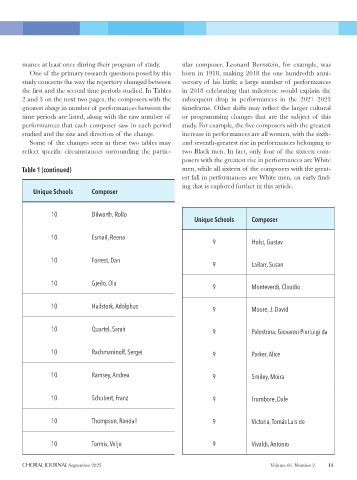
        Table 1 (continued)                                 men, while all sixteen of the composers with the great-
                                                            est fall in performances are White men, an early find-
                                                            ing that is explored further in this article.
            Unique Schools     Composer


                 10            Dilworth, Rollo
                                                                Unique Schools    Composer

                 10            Esmail, Reena
                                                                      9           Holst, Gustav


                 10            Forrest, Dan
                                                                      9           LaBarr, Susan

                 10            Gjeilo, Ola
                                                                      9           Monteverdi, Claudio


                 10            Hailstork, Adolphus
                                                                      9           Moore, J. David


                 10            Quartel, Sarah
                                                                      9           Palestrina, Giovanni Pierluigi da

                 10            Rachmaninoff, Sergei                   9           Parker, Alice


                 10            Ramsey, Andrea                         9           Smiley, Moira


                 10            Schubert, Franz                        9           Trumbore, Dale


                 10            Thompson, Randall                      9           Victoria, Tomás Luis de


                 10            Tormis, Veljo                          9           Vivaldi, Antonio


        CHORAL JOURNAL September 2025                                                                                     Volume 66  Number 2          11

